My Primary Roles: Physical Prototyping, Pattern Making, Metal Casting, Machining, Woodworking
Digital Tools: AutoCAD
Project Context: Design & Manufacturing Project at the Product Realization Lab (PRL)
Stand By Me
Designing and creating a Fender guitar mount @ the Product Realization Lab
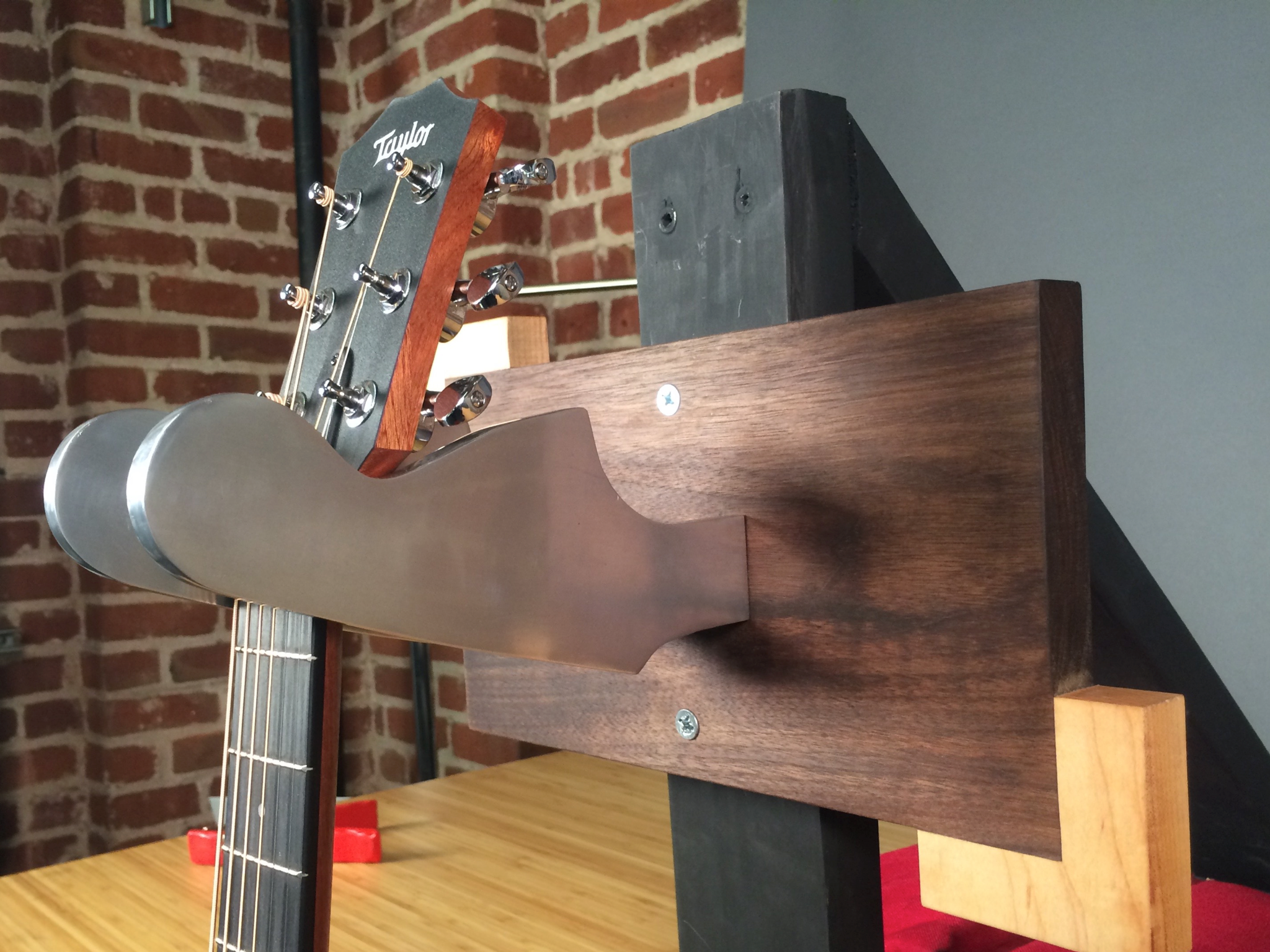
Stand by me serves as a guitar mount that takes advantage of the signature geometry of Fender Stratocaster headstocks. It uses two headstock structures to stabilize and mount a guitar onto a wall.
Background Story:
My guitar teacher once told me, ‘keeping your guitar outside your case will encourage you to
pick it up and practice more’. I followed his advice, and realized a tad too late that placing my
guitar precariously, without any stable support can be largely detrimental; my first guitar
(thankfully an inexpensive one) snapped due to no support structures outside its case. Ever
since, I made it a point to always use a guitar stand regardless of how menacing and
unappealing they may look. Now that I had the chance to design and create a product that
means a lot to me, I thought I would make a companion of a stand that is as appealing as my
guitar itself.
The name Stand By Me is a reference to legendary Ben E King's song of the same name.
Prototype Creation:
In order to create my prototype, I used a bandsaw and circular sanders to make the two wooden, Stratocaster headstock-shaped holders. I then attached them to a wooden backboard using wood screws and a hand drill, and joined a carved, (largely) cylindrical wooden piece between the two holders for increased stability. I used nails and wood glue to hold the cylindrical piece in place.
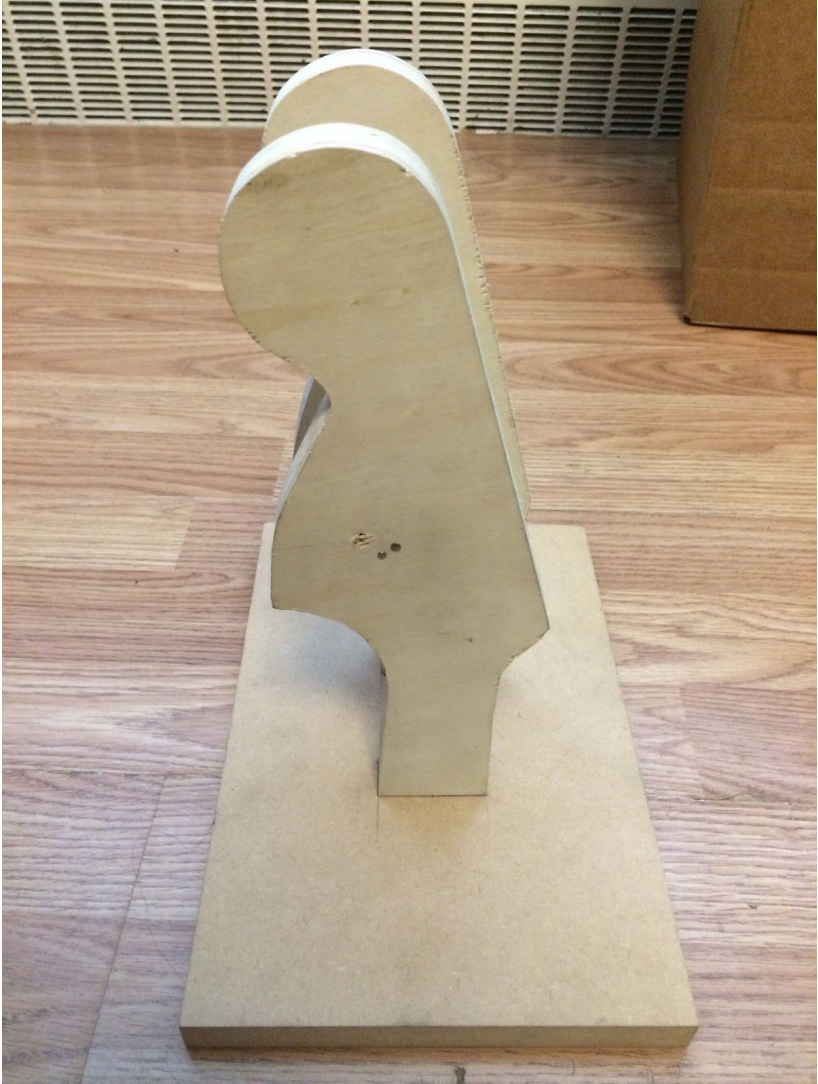
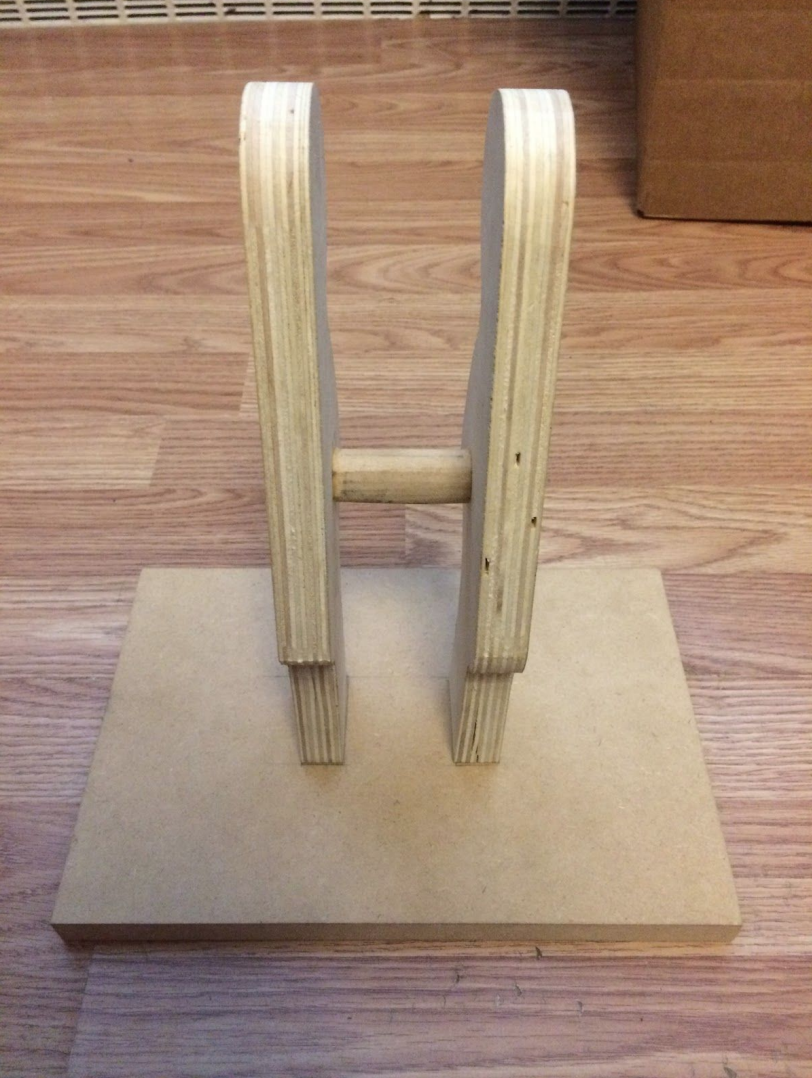
There were several learnings I took note of as I created my prototype out of wood. Firstly, I would need to decrease the length of the headstock projections; given that the actual guitar would be placed only at the ends of the projections, the moment of force about the point of contact between the base and the projections would be high. Decreasing the projection length would reduce this moment and increase product stability.
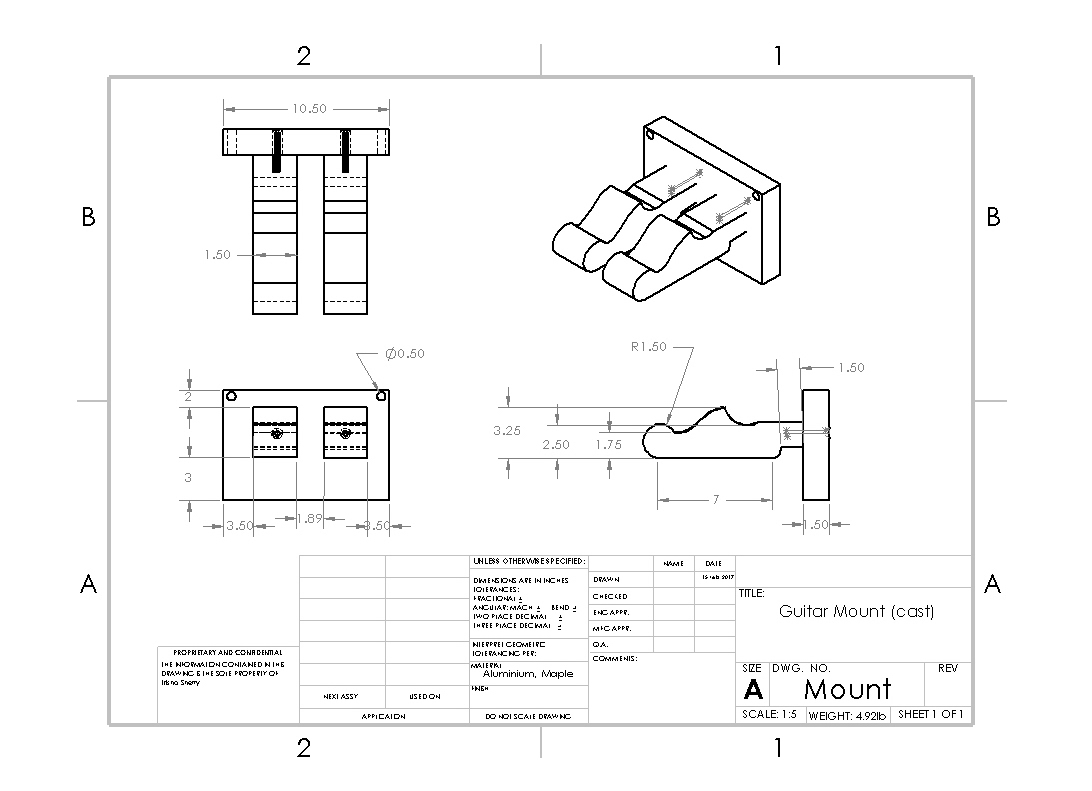
I specifically chose the design of the Jimi Hendrix tribute Stratocaster because of its geometry and large curvature - things that would allow a guitar to be placed with stability. However, I realized that I don’t need all the breadth that the original shape has, since this breadth was unnecessary added weight. To account for this, I reduced the dimensions where there is no contact with the guitar, so that the overall weight of the metal was lowered and there was less load on the wooden base that runs perpendicular to the headstock projections.
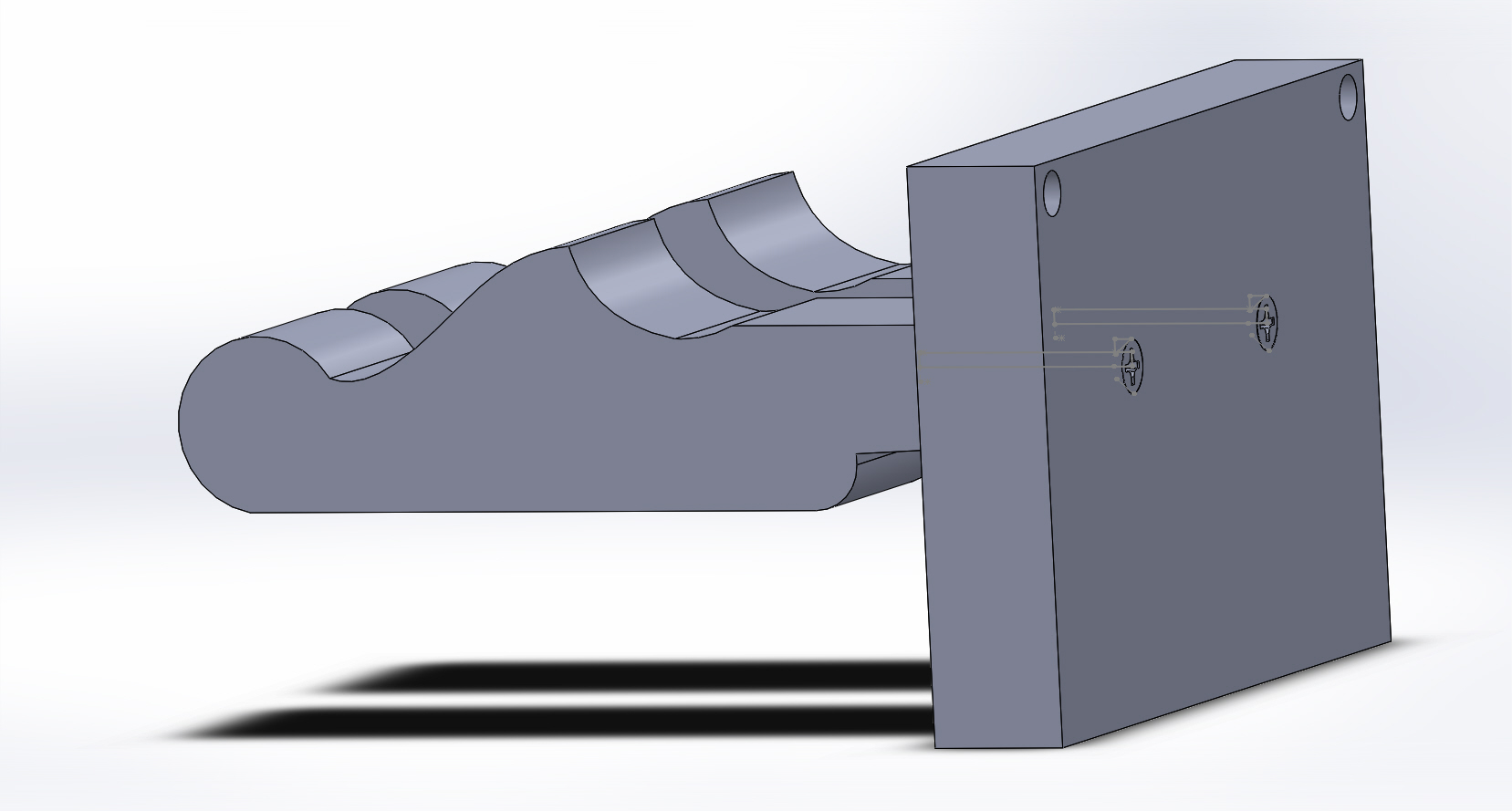
The final product would have wood-metal interactions, so the joints would need to be changed accordingly. I planned on having a tapped hole in the cast piece (headstock) and a clearance hole in the wood in order to screw the two together from the back of the wood piece (face that is in contact with the wall). With regards to the type of wood to use, I considered using two american hardwoods (one dark and one light) to create a striped design while the metal I used was an aluminium alloy, something that is both light and durable.
Manufacturing Process:
In order to take this stand from the prototype to the finished product stage, there were four major processes to complete:
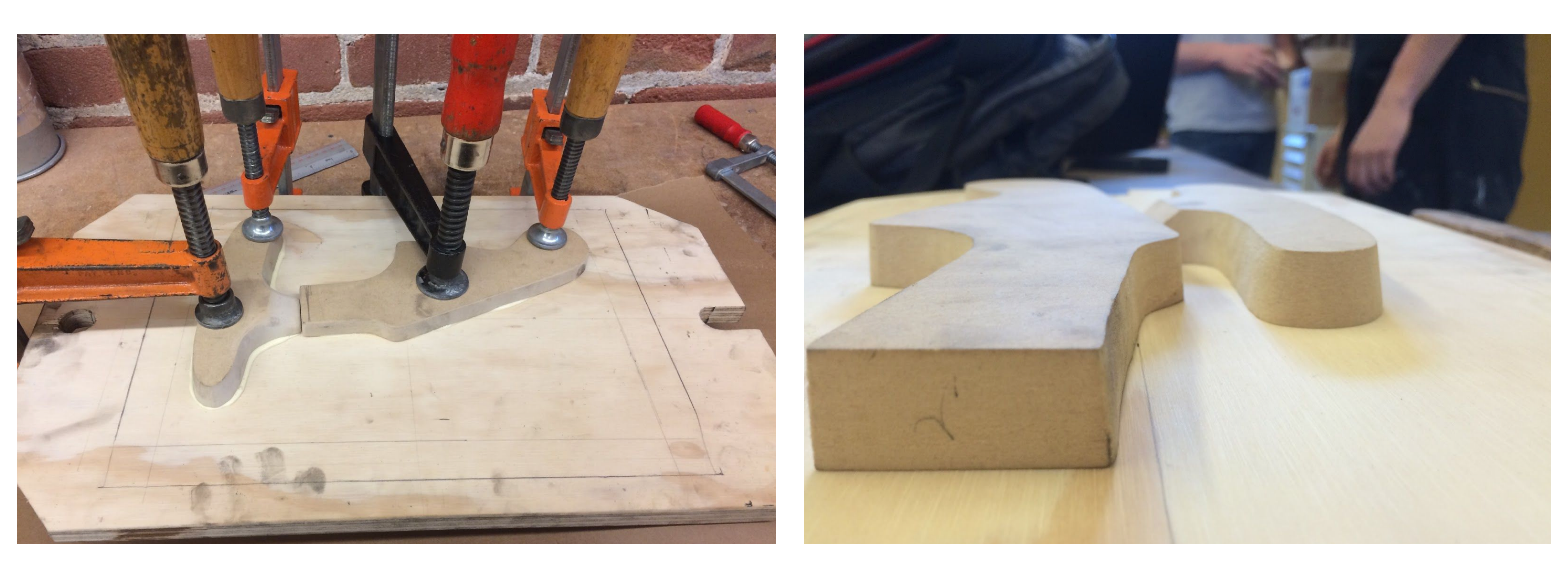
- Pattern Making: Creating the pattern board for the cast mold
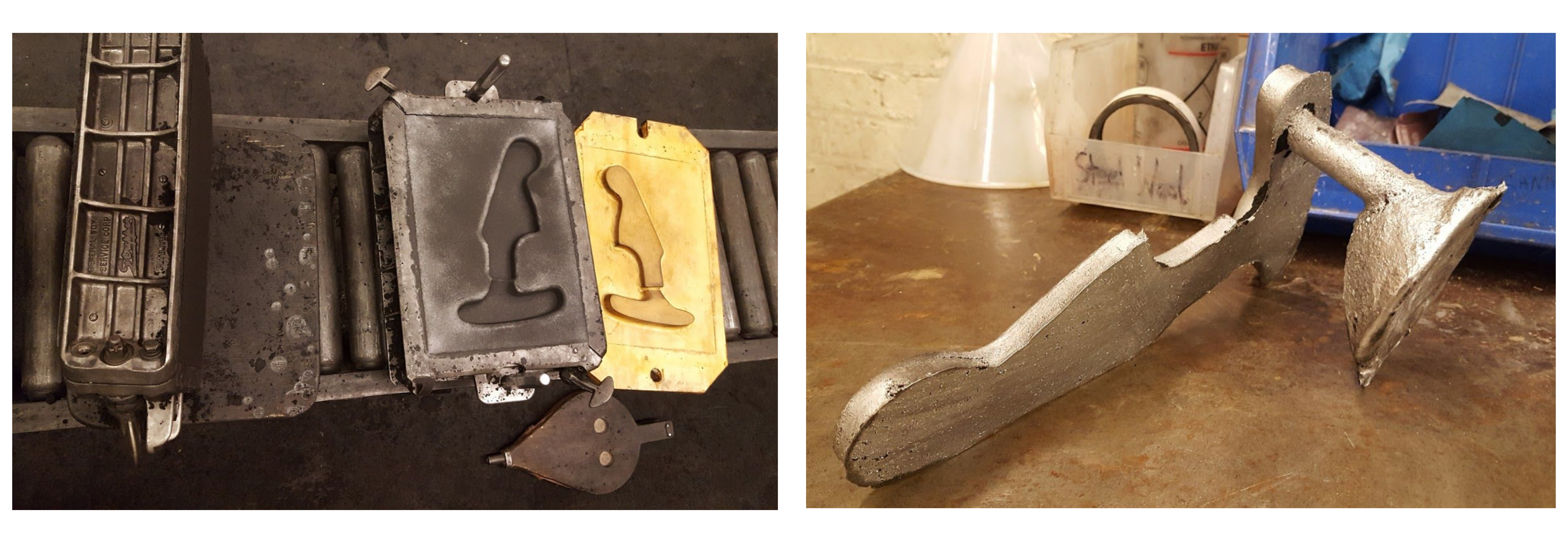
- Metal casting: Pouring aluminium alloy into the mold
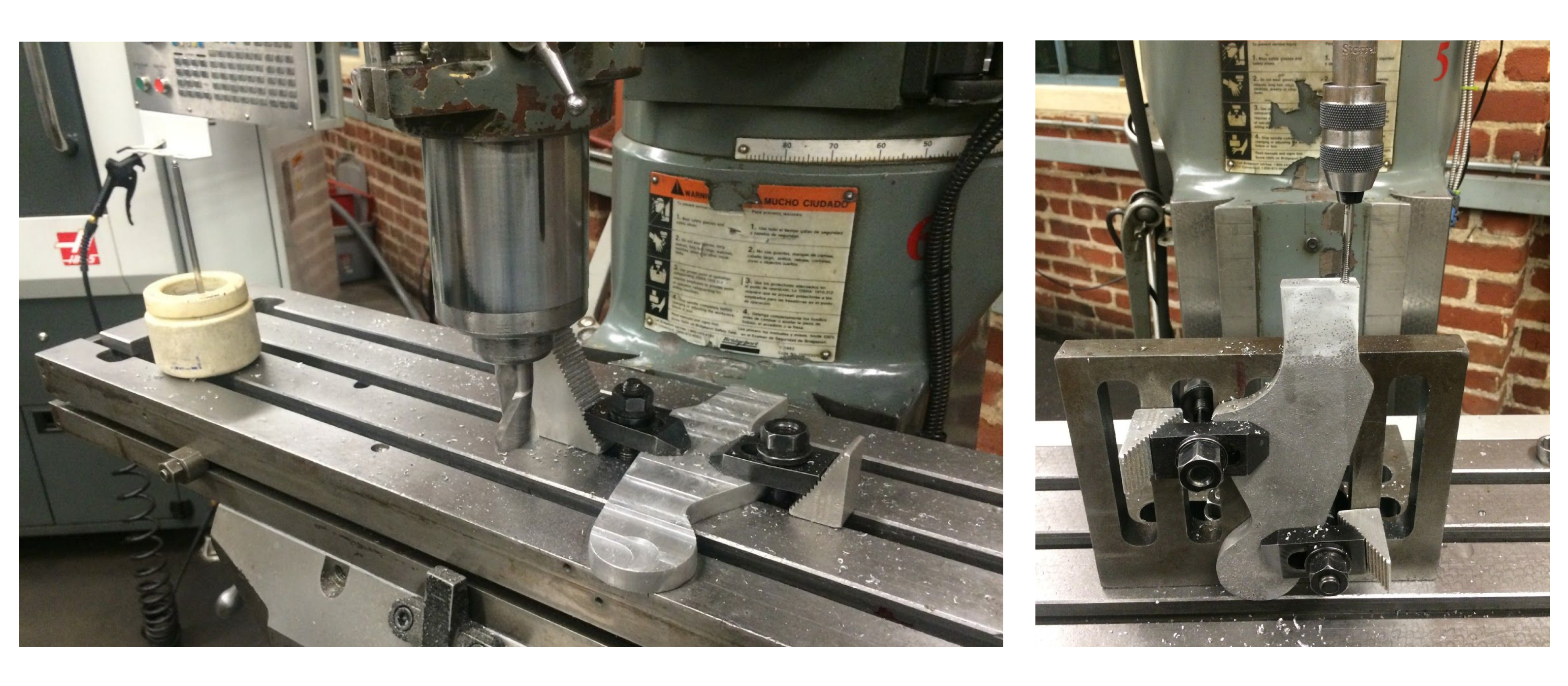
- Machining: Creating the tapped holes and smooth finishing on the headstock surface
- Woodworking: Creating a sturdy and aesthetic wooden base for the stand
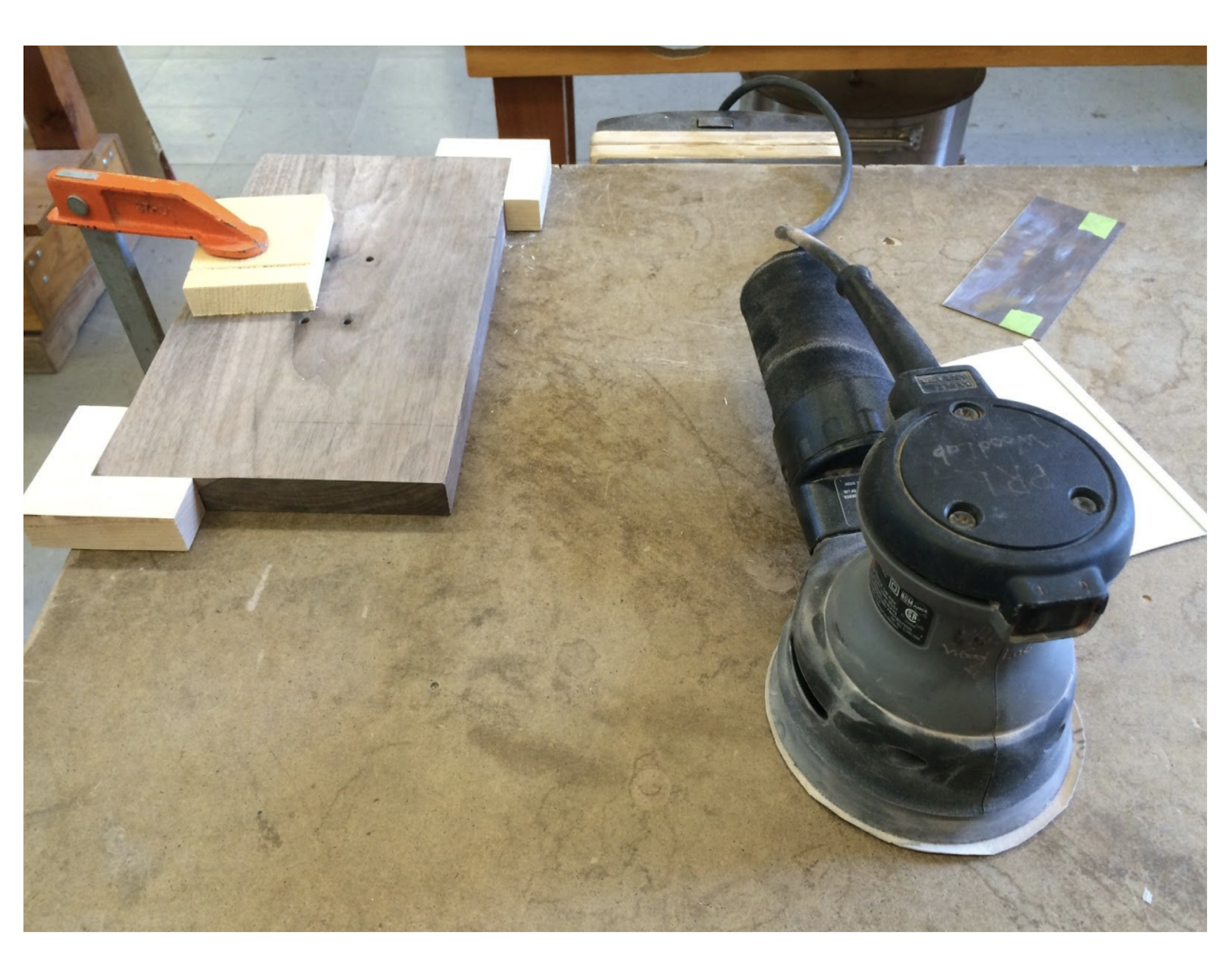
I documented each of these processes through photos, as has been presented below.
Pattern Making
Metal Casting
Machining
Woodworking
Finished & Tested Product:
The primary function of my product was to serve as a guitar
stable mount, inspired by the legendary Stratocaster shape. After having created and
assembled my product (and attached to the 2x4 structure),
I was finally able to test it by placing my guitar on it and it
worked exactly as expected!
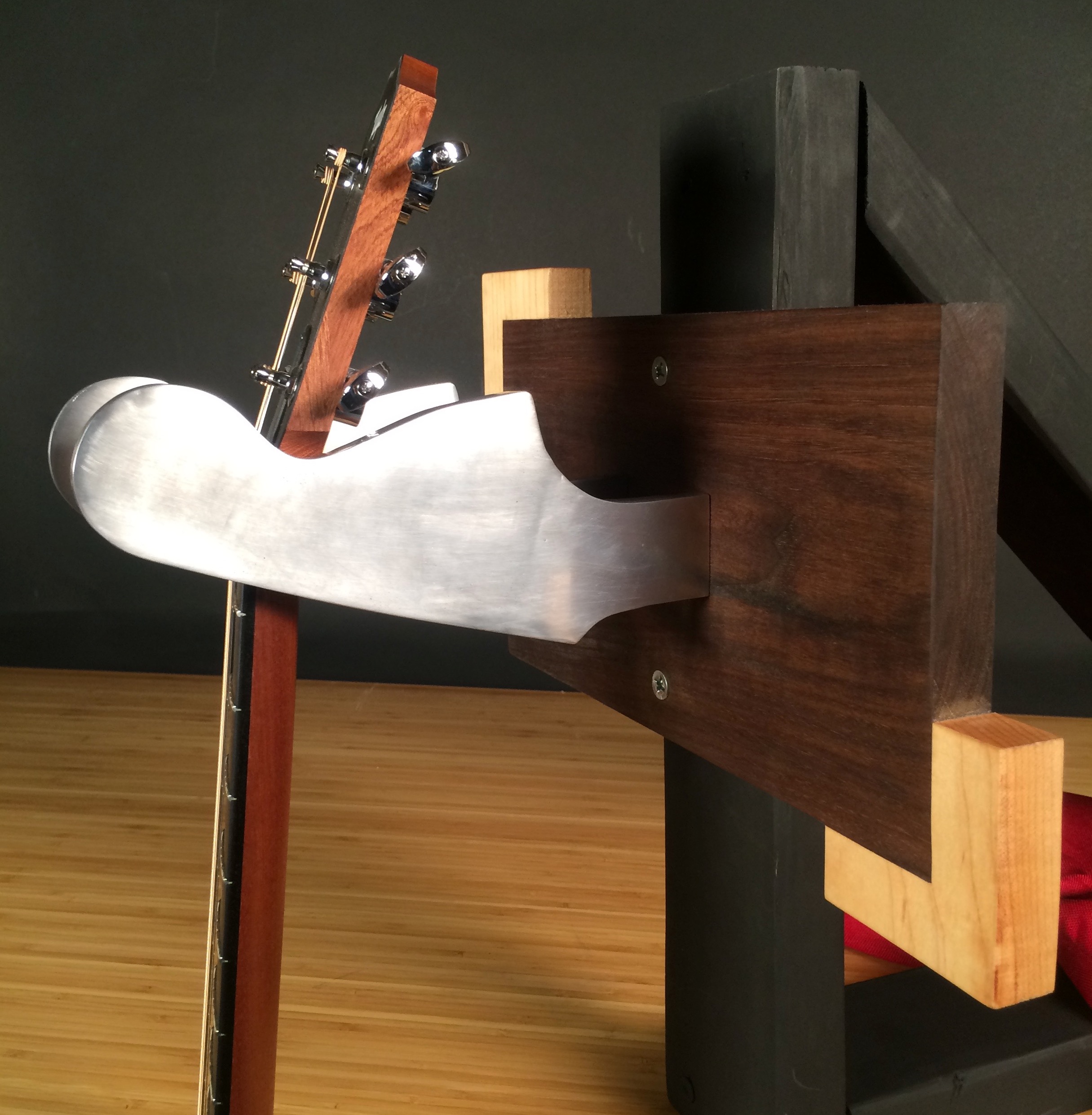
Note: The black structure is not a part of the project, and is present to symbolize a wall stud.
I painted the 2x4 structure black to mask it (such that it would not stand out) since it is not a part of my project, but rather a way to symbolise how my mount would go onto a stud in an actual wall. Overall, it was incredibly fulfilling to see the final product come together and work exactly as I had envisioned it to. It was truly something I was proud of and I was excited to put it on display at Meet the Makers Fair!